
Full-Arch Dental Implants
Full Arch Dental Implants vs. Dentures: Which Is Right for You?
· 6 min read · Reviewed by the Healthy Smiles California clinical team
Quick answer
Full Arch Dental Implants vs. Dentures: Which Is Right for You?
Dentures are removable and cost less up front, but they rest on your gums and can shift, rub, and limit what you eat. Full arch dental implants use a small number of implants (often four to six per arch) to hold a fixed set of teeth in place. They feel and function much closer to natural teeth and help preserve your jawbone, but they involve surgery and a higher up-front investment. The right choice depends on your health, your jawbone, your budget, and your priorities.
Reviewed by the Healthy Smiles California clinical team · Updated October 12, 2026
If you are missing most or all of your teeth, you have probably heard two main options: traditional dentures or full arch dental implants. Both can give you a complete smile, but they feel very different, last differently, and cost differently. Choosing well starts with understanding how each one actually works in daily life.
How Traditional Dentures Work
A conventional full denture is a removable set of artificial teeth set in a gum-colored base. The upper denture usually stays in place by suction against the roof of your mouth. The lower denture has less surface area to grip and a moving tongue to contend with, so it tends to be less stable.
Advantages of dentures
- Lower up-front cost
- No surgery required in most cases
- Faster to get started
- Easy to remove for cleaning
Common drawbacks
- They can slip or click when you eat or speak, and many people rely on adhesive
- Sore spots and rubbing on the gums are common
- Chewing power is limited, so some foods become difficult or off the table
- Dentures sit on the gums and do not stimulate the jawbone, so bone loss continues over time
- As the jaw changes shape, dentures loosen and need relining, adjustment, or replacement
How Full Arch Dental Implants Work
Full arch dental implants replace an entire upper or lower set of teeth using several dental implants placed in the jaw. These small titanium posts act as artificial tooth roots, and a custom set of teeth is secured on top of them. All-on-4 is the best-known approach, using four strategically placed implants per arch. Some cases use five or six. To learn how these terms differ, see our guide to full arch vs. All-on-4 implants.
Because the teeth are anchored in the jaw rather than resting on the gums, they stay put. In many cases, a temporary set of teeth can be attached on the day of surgery, depending on your bone and the stability of the implants, with the final set placed after healing.
Advantages of full arch implants
- Fixed teeth that do not slip, click, or need adhesive
- Stronger, more confident chewing and a wider range of foods
- Clearer speech, since nothing covers the roof of your mouth
- Implants stimulate the jawbone, which helps preserve it
- A natural-looking smile and a feel much closer to real teeth
Common drawbacks
- A higher up-front investment
- Surgery and a healing period are required
- Not everyone is an immediate candidate; some patients need bone grafting or gum treatment first
- The teeth are not removed at home, so careful cleaning around them is important
Full Arch Implants vs. Dentures: Side by Side
Stability: Dentures can move. Full arch implants are fixed in place.
Chewing: Dentures offer limited bite strength. Implant-supported teeth feel much closer to natural teeth.
Comfort: Dentures can cause sore spots and slipping. Implants avoid most of the rubbing because they do not rest on the gums.
Bone health: Dentures do not stimulate the jaw, and bone loss continues. Implants help keep the bone active.
Cost: Dentures cost less up front but may need relining and replacement over the years. Full arch implants cost more initially but are designed to be a long-term solution. Our breakdown of full arch and All-on-4 costs can help you plan.
Maintenance: Dentures are taken out and cleaned daily. Implant teeth are cleaned in the mouth with careful brushing, a water flosser or floss threaders, and regular professional checkups.
A Middle Option: Implant-Retained Dentures
If a fully fixed set of teeth is not right for you, an implant-retained denture may be. This is a removable denture that snaps onto a few implants. It is more secure than a standard denture and usually costs less than a fixed full arch, though it is still removable and does not offer quite the same feel as fixed teeth. Your dentist can tell you whether this makes sense for your jaw and goals.
Who Is a Good Candidate for Full Arch Implants?
Most adults who are missing many or all of their teeth, or whose remaining teeth are failing, can be evaluated for full arch implants. Your dentist will look at:
- Jawbone volume and density. Enough bone is needed to hold the implants. Bone grafting can help in some cases.
- Gum health. Active gum disease should be treated first.
- Overall health. Conditions such as uncontrolled diabetes can affect healing.
- Habits. Smoking raises the risk of implant complications, and quitting greatly improves your odds of success.
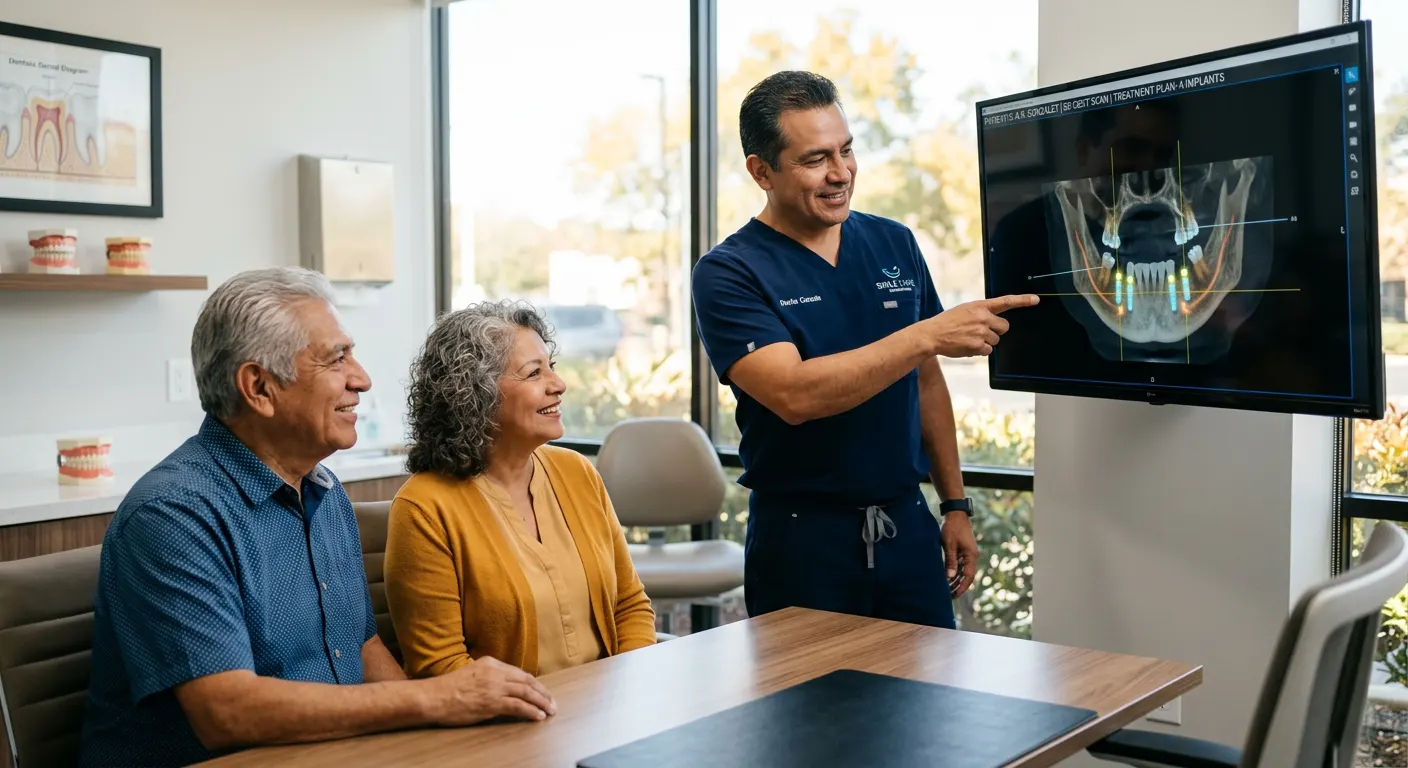
A consultation with imaging is the only reliable way to know. Online guides, including this one, cannot replace a personal evaluation.
What Does Recovery Look Like?
Most patients have some swelling, soreness, and a soft-food diet for the first days to weeks, while the implants fuse with the bone over a few months. Your dentist will give you detailed aftercare instructions. For more, read what to expect after implant surgery and how long implants take to heal. If nerves about surgery are holding you back, ask about sedation dentistry options at your location.
Which One Should You Choose?
Dentures may be the better fit if you need a lower-cost solution, are not a candidate for surgery, or want a temporary option while you plan for implants. Full arch dental implants are often the better fit if you want fixed teeth, stronger chewing, and a long-term solution that feels as natural as possible.
Many patients who have worn dentures for years say the biggest change with implants is simply not thinking about their teeth anymore. Your results and experience will vary, so the best step is a personal consultation.
Full Arch Dental Implants in Southern California
Healthy Smiles California connects you with locally run dental offices that offer full arch dental implants. Availability of specific treatments can vary by office, so please confirm with your location. Ask about our $5,000 off full arch implants special and confirm current terms when you call. Flexible payment and financing options are available, and most major PPOs are accepted.
- Santa Clarita: (661) 231-7079
- Norwalk: (562) 645-4807
- El Monte: (626) 507-3373
- Long Beach: (562) 414-5172
Frequently Asked Questions
Are full arch implants better than dentures?
For many patients, yes, because the teeth are fixed, more stable, and help preserve the jawbone. Dentures can still be the right choice for budget reasons or when surgery is not an option. The best choice depends on your health and goals.
Can I get implants if I have worn dentures for years?
Often, yes. Long-term denture wearers may have some bone loss, so your dentist will check your jawbone with imaging. Bone grafting or a different implant plan may help in some cases.
Do full arch implants feel like real teeth?
Most patients find them far closer to natural teeth than dentures, since they do not move and do not cover the palate. You still need to brush, clean around them, and visit your dentist regularly.
How long do full arch implants last?
Implants are designed to last many years, often decades, with good care and regular checkups. The teeth attached to them may eventually need service or replacement due to normal wear.
Are full arch implants painful?
The procedure is done with anesthesia or sedation, and most patients manage recovery discomfort with medication prescribed or recommended by their dentist. Ask your team what to expect for your case.
Ready to Compare Your Options?
The right choice is the one that fits your health, your budget, and the way you want to live. Our teams will review your options honestly, answer your questions, and help you decide with confidence. Contact your nearest Healthy Smiles California office to schedule a full arch implant consultation.
This article is for general education and is not a substitute for professional dental advice. Treatment suitability varies by patient.
This article is for general education and is not a diagnosis. Every mouth is different — book an exam for advice specific to you.
Ready to talk about full-arch dental implants?
Explore Full-Arch Dental Implants